
(Harsh Panwar is a Second year student at National Law University, Delhi)
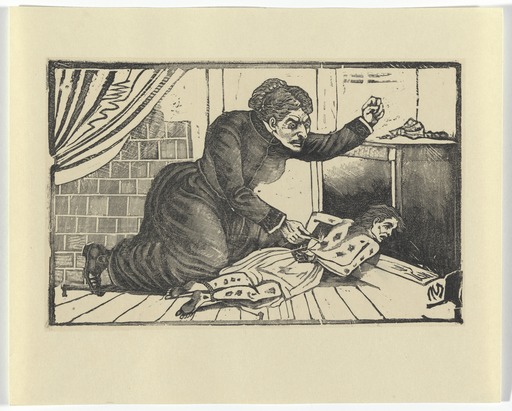
Featured Illustration – The Crime of La Bejarano by Jose Guadalupe Posada
Section 69 of the Information Technology Act (IT Act) has been shrouded in dispute, ever since it was introduced as an amendment, in 2008, and was passed in the Parliament without debate. This section is increasingly being used by the present government for many of its affairs. Recently, the government went on a banning spree by blocking dozens of Chinese apps, taking the support of Section 69A of the IT Act 2000. In December 2018, the government had allowed 10 central agencies to snoop and decrypt “any information generated, transmitted, received or stored in any computer”, this was empowered by Section 69B of the IT Act 2000.
These instances display the growing prevalence of this provision in our daily lives which makes it imperative to ascertain how well does this provision fare with well-founded constitutional tests. The article shall delve into all these aspects by first examining the scope of Section 69 of the IT Act and then analyse the three points of conflict of the section with the existing constitutional mechanisms. In the end, the article shall conclude by providing suggestions for reform.
The scope of Section 69 of the IT Act
Section 69 of the IT Act can be called a loose piece of legislation due to its seemingly unbridled scope. It allows for surveillance to “intercept, monitor or decrypt” data “in the interest of the sovereignty or integrity of India, defence of India, security of the State, friendly relations with foreign States or public order”. Although most of these interests lie within the limitations of free speech under Article 19(2), however, the section increases its scope beyond 19(2) by inserting another ground consisting ‘defence of India’, which is neither defined within the Constitution nor the IT Act and its rules.
Furthermore, section 69 (A) of the IT Act has an additional sixth criteria i.e. “preventing incitement to the commission of any cognizable offence relating to above or for investigation of any offence”. This includes transmission of online as well as the stored data, information and communication. It enables agencies to intercept the actions of the subscribers directly, and eliminates the need to go through the intermediaries. This increases the power of surveillance to be invariably exercised against crores of ‘potential’ crime-doers.
Section 69B of the statute provides any governmental agency the authority to “control and collect traffic data or information generated, transmitted, received or stored from any computer resource.” This is infinitely wider in scope compared to the Indian Telegraph Act, which only allowed the government to tap phones (under section 5(2) of Indian Telegraph Act 1885), which further got modified by the 1996 judgement of PUCL vs Union of India (hereinafter PUCL case) wherein the Supreme Court allowed phone tapping only on a restricted case-to-case basis. Such a safeguard is absent from the IT Act, thereby increasing its scope tremendously.
Such unbridled powers granted to the government conflicts with existing constitutional provisions, most notably, the right to privacy, free speech and procedure established by law. All these concepts are dynamic and evolving with each day, thereby necessitating that the laws which interact with these concepts evolve in a similar manner. The major points of conflict are:
1. Lack of real safeguards against misuse of power
Section 69 of the IT Act and the rules thereunder provide the executive with the discretion on issues related to the privacy of an individual with no real checks and balances. According to Section 3 of Information Technology (Procedure and Safeguards for Interception, Monitoring and Decryption of Information) Rules, 2009 (IT Rules), the surveillance needs to be carried out on written orders of a competent authority which comprises the secretary in the Ministry of Home Affairs, and in the State Government or Union territory, a Secretary in charge of the Home department. In unavoidable circumstances, orders can be issued by an officer, not below the rank of Joint Secretary of the Government of India, and in emergency circumstances, they can be carried by with the prior approval of the Head or the second senior-most officer of the security and law enforcement agency. Within Rule 22 of the IT Rules 2009, the only safeguard provided against such orders is that all such written orders by the competent authority must be scrutinized by a review committee constituted under Rule 419A of the Indian Telegraph Rules, 1951.
However, the setup of this review committee, as defined under the Telegraph Rules consists only of executive members and has no judicial oversight. This implies that the executive is essentially reviewing its own order. This clearly violates the principle enunciated under Maneka Gandhi v. Union of India which held that if a procedure established by law fails to be just, fair and reasonable, then it violates Article 21 of the Constitution. The principles of Natural Justice govern the fairness of decision making and are also applicable to administrative processes as held by the Supreme Court in Uma Nath Pandey v. State of UP & Ors. Here, the fundamental principle of Natural Justice i.e Nemo Judex In Causa Sua (no one should be a judge in one’s own cause) is clearly defied due to the apparent institutional bias and hence, the procedure fails to be just, fair and reasonable.
Secondly, the Justice BN Srikrishna committee report presents another glaring reality of the review committee. The report mentions that an application filed under the Right to Information Act, 2005 revealed that the review committee has an unrealistic task of reviewing 15,000-18,000 interception orders in every meeting while meeting once in two months. This means that it is practically impossible to ensure that every order passed by the competent authority will be checked. These facts prove that the system of checks and balances instituted to ensure fairness is nothing but a façade.
2. Section 69 produces a chilling effect over free speech and expression
The notion of speech or expression being ‘chilled’ is pervasive among the legal community. It is theorized that a state of surveillance produces a ‘chilling effect’ on freedom of speech, which is protected under Article 19(1)(a) of the Indian Constitution. Justice Subba Rao in the judgement of Kharak Singh v. State of Uttar Pradesh explained the chilling effect caused by surveillance in the following lines
“The freedom of movement in clause (d) therefore must be a movement in a free country, i.e., in a country where he can do whatever he likes, speak to whomsoever he wants, meet people of his own choice without any apprehension, subject of course to the law of social control. The petitioner under the shadow of surveillance is certainly deprived of this freedom. He can move physically, but he cannot do so freely, for all his activities are watched and noted. The shroud of surveillance cast upon him perforce engenders inhibitions in him and he cannot act freely as he would like to do.”
The chilling effect in the context of surveillance has pernicious consequences. It would not only impact directly what a person chooses to say or write but indirectly, it would also affect what people might read. It can be a tool to suppress political opinions or notions which lie contrary to the mainstream because individuals, cognizant of surveillance exercised upon them, may choose not to express themselves under the threat of adverse consequences. This was duly noted in the American case of NAACP v. Alabama, wherein the Supreme Court of the USA struck down membership lists of civil rights organizations on the rationale that knowledge of surveillance upon such organisations would indirectly force them to exercise self-restraint while casting politically unpopular or dissentious opinions.
Section 69 casts a chilling effect as described above due to its boundless ability to spectate on almost any citizen in the country. The order passed by the government authorizing 10 central agencies to snoop into any computer device in the country is a prime example of casting a chilling effect. This is because even though the government claims that such powers will only be used to protect the ‘sovereignty and integrity of India’, it is pertinent to note that the phrase itself is not defined within the act, and combined with that the biased procedural safeguards, could be interpreted to be target those holding a view contrary to that of the executives in the elected government, thereby casting a chilling effect.
The doctrine of ‘chilling effect’ has also been criticised by scholars on account of being overprotective of freedom of speech which could result in some violations. However, the core argument here is that surveillance should not be conducted on vague grounds with a massive scope, and rather, should be allowed only in rare circumstances with appropriate procedural safeguards.
3. By failing the test for proportionality, Section 69 of the IT Act limits the right to privacy
The landmark judgment in K.S Puttaswamy v. The Union of India declared the much-contested issue of Right to Privacy as part and parcel of the right to life and personal liberty under Article 21 of the constitution which entails within it the right to live with human dignity. However, courts have also held that the same right can be curtailed as per the procedure established by law. Justice Ranjan Gogoi, in the case of Ritesh Sinha v. Union of India, relying upon Dental College and Research Centre v. State of Madhya Pradesh, Gobind v. State of Madhya Pradesh, and the Puttaswamy judgement, added to the law of privacy by stating that “the fundamental right to privacy cannot be construed as absolute and must bow down to compelling public interest”.
The doctrine of compelling public interest is a test more common in American jurisprudence, used often in equal protection cases and cases of discrimination. The American Supreme Court case of Grutter v. Bollinger demonstrates that the test of compelling interest not only requires state interest to be of paramount importance to justify an infringement of the right, but also the fact that the restriction should be tailored in such a manner that infringes the right in a manner that is as narrowest as possible in order to achieve its purported goals (also known as the narrow tailoring test).
In India, the test was implicitly applied in the case of Gobind v. State of M.P wherein the court dealt with police regulations allowing surveillance which, inter alia, may consist of domiciliary visits both by day and night at frequent but irregular intervals, based only on the condition that the District Superintendent ‘believes’ that the particular individual leads a life of crime. The Supreme court, upon applying the test of compelling public interest upheld the constitutionality of the impugned surveillance regulation only by narrowing its scope in such a manner as to ensure that the State’s objective of securing public safety was met in a way that minimally infringed the right to privacy.
In the context of Section 69, the compelling interest test is deemed not to be met because the legal framework surrounding the same is vague which results in such a large scope of its application on the general population that it cannot be said that the government is following the narrow-tailoring principle into the provision by keeping the infringement minimum. The Supreme court, in the PUCL case, held that in cases of surveillance, the narrow tailoring principle would imply that surveillance necessarily has to be exercised specifically on a case-by-case basis, rather than on a general scheme for all circumstances. Furthermore, the lack of judicial oversight in the review process of surveillance cases is something that has been proven to have such paramount importance as to not justify the infringement of fundamental principles of natural justice, thereby not fulfilling the compelling state interest doctrine
Conclusion and Suggestions
The privacy jurisprudence in our country has taken a sharp turn in the last few years. Comparing the decade-old Section 69 of the IT act with the same reveals that the provision does not fall in line with the latest precedents. Although surveillance per se is not unconstitutional, but when the same is carried out with an unbridled scope and a lack of procedural safeguards, it produces a chilling effect and conflicts with existing constitutional values. Therefore, the provision must be read down to adhere to the principles of constitutionalism.
The state must carefully balance individual autonomy with legitimate state interests. The guiding principle behind legislation intending to curtail fundamental rights was given under Maneka Gandhi v. Union of India which provides that the following regulatory procedures must be followed under Article 21
“The procedure which deals with the modalities of regulating, restricting or even rejecting a fundamental right falling within Article 21 has to be fair, not foolish, carefully designed to effectuate, not to subvert, the substantive right itself”. Thus, understood, “procedure” must rule out anything arbitrary, freakish or bizarre. A valuable constitutional right can be canalized only by civilized processes”
The Supreme Court in the PUCL case provides appropriate guidelines for conducting surveillance by stating that surveillance must be carried out on a case-to-case basis and must outline fair safeguards to rule out misuse of such powers. This would keep infringement at a minimum and keep the narrow tailoring principle in check. Additionally, prior judicial sanction should be incorporated into the act in order to rule out institutional bias and arbitrariness in the decision-making process. This process is known as the ‘probable cause’ principle, which requires circumstantial evidence along with reasonable suspicion of the impugned act, and the same is already in use in the USA. Lastly, it is essential that the lawmakers lay down objective standards to sanction infringement of privacy, to avoid misuse of subjective interpretation. This would also go a long way in curbing the chilling effect cast to the freedom of speech and expression.
Leave a Reply