
Anushka Satya and Nishant Kumar are second year students at National Law University Delhi and Hidayatullah National Law University, Raipur respectively.
Introduction:
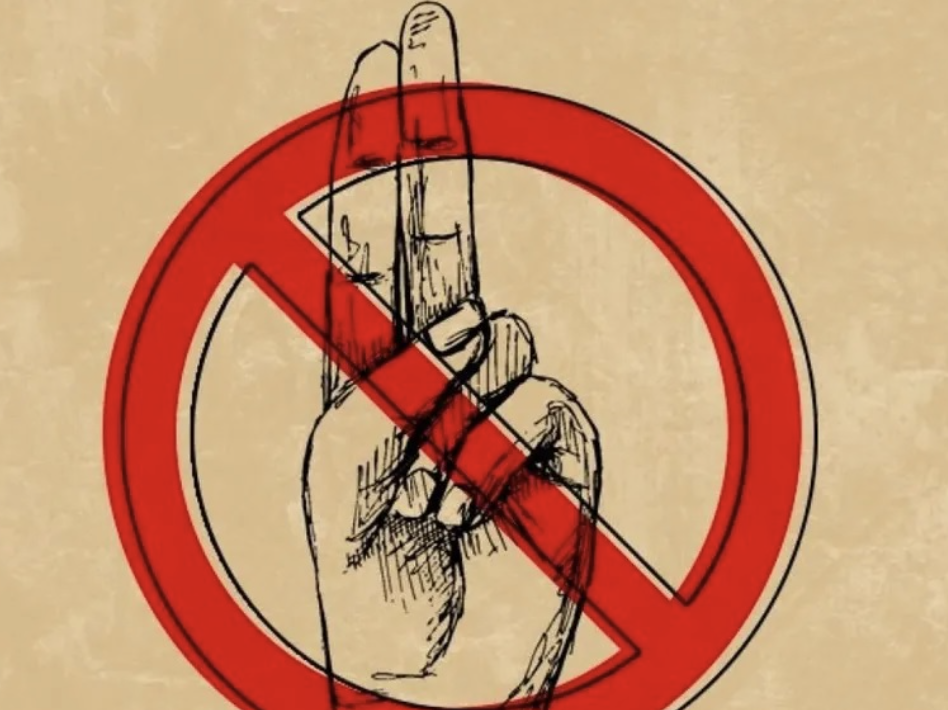
Recently, in the case of State of Jharkhand v. Shailendra Kumar Rai, the Supreme Court division bench constitutive of Justices Chandrachud and Hima Kohli has reasserted the ban on the use of virginity test, more commonly known as the two-finger test. The frequent use of this test has proved to be an issue of great concern across the nation.
The two-finger test is conducted to determine the sexual history of victims of rape, in order to ascertain the veracity of victim’s statement regarding the offence and the alleged offender. The test is performed by a doctor who puts two fingers inside the vagina of the sexual assault victim to determine her virginity. The test is based on the fallacious assumption that if a woman is ‘habitually sexually active’, this factor is relevant in deciphering the liability of the accused under Section 375 of the Indian Penal Code (IPC). This is because the allusion of previous sexual engagement of the accused happens to play a role in negatively considering the integrity of the victim or gives the accused a benefit of doubt.
Even as the ban on the virginity test is undoubtedly necessary and the recent judgement banning the test has been widely applauded in the legal fraternity and beyond, this blog post aims to contend that the judgement pronounced by the Apex Court was far from being an act sufficient enough to achieve the set objective.
Two-finger Test: Lacking Legal Basis
The test is devoid of any scientific basis in evidencing a possibility of any sexual act against the victim. The two-finger test is a clear indicator of persistent strands of patriarchy and sexism in the Indian society. This is because the test seeks to decipher whether the woman has had a history of sexual act, and it is contingent upon the sexual activity of the woman that the authorities attempt to formulate an opinion on the occurrence of the alleged offence.
The test is a complete invasion of the right to privacy of the victim, both physical and mental, and her right to dignity enshrined under Article 21 of the Constitution. In the renowned case of Justice K. S. Puttaswamy v. Union of India, the Apex Court established that right to privacy is integral and crucial to Part III of the Constitution. Furthermore, even though the court refrained from referring to right to privacy as an absolute right, it held that any infringement of one’s privacy shall qualify the triple test of legitimate aim, proportionality and legality. The virginity test barely gets qualified by the triple test laid down by the Puttaswamy judgement as it lacks any scientific backing for considering it legitimate or proportionate.
Therefore, in the recent case of State of Jharkhand v. Shailendra Kumar Rai, the Supreme Court has explicitly ruled that the two-finger test is in grave violation of fundamental rights of life and liberty of a woman and shall be deemed to be banned. The court has further held that any indulgence with the test shall be considered to be a ‘misconduct’. The bench also remarked that it is unacceptable and patriarchal to claim that little credence can be placed upon a statement made by a woman regarding the commission of rape merely because she is sexually active.
Shailendra case: an addition or repetition?
The observations made in this judgement are immensely accurate and unerring. However, nothing on the validity of the two-finger test that the Supreme Court has ruled is novel.
Back in 2013, like in the Shailendra case, in the case of Lillu @ Rajesh v. State of Haryana, the Supreme Court faced with the issue of determining the validity of the two-finger test. In fact, in the 2013 case, one of the questions of law the court dealt with was whether the test is violative of the rights of a rape victim under Article 21. The court explicitly ruled the test to be illegitimate, thereby outlawing it.
Further on, in 2013 the Verma Committee, constituted following the Nirbhaya incident, submitted its report, stated that the past sexual experience of a woman is completely irrelevant in determining her consent in a later sexual act. The Committee also recommended the Ministry of Health to issue Guidelines to create standard procedures to be followed by medical practitioners and officers handling sexual assault victims.
On the heels of these recommendations, in 2014, the Ministry of Health and Family Welfare released Guidelines condemning the use of this test. The Guidelines explicitly outlaw the practice arguing that any legal remedy shall not retraumatize the victims.
Moreover, the argument that forms basis of the test, which is that testimony of a woman who is habitually sexually active cannot be relied upon, was negated by the legislature when it enacted the Criminal Law Amendment Act 2019 to include Section 53A to the Indian Evidence Act. The amended law declares that the previous sexual character of women is immaterial to the issue of consent or quality of consent in prosecution of sexual offences.
Recent judgement: A Missed Opportunity
As the above analysis presents a series of measures that have been take by various authorities in pursuit of prohibiting the operation of the two-finger test, it is highly despondent to witness reports such as the one released by the Human Rights Watch showcasing the ceaseless practice of the test. Apart from this, it is a matter of utmost consideration that a high court of the country based its ruling on the result of two-finger test conducted on the victim in the Shailendra case while overturning the conviction of the accused awarded by the Additional District judge.
The question that one begs to ask is two-fold. Firstly, why is it that the test is still in continued use, even when several authorities have repeatedly and explicitly proscribed it? Secondly, against the given backdrop of repeated non-compliance of the legal position on the test, are the directions issued by the Apex Court in the present case sufficient to mitigate the problem?
Answering the first question, in 2020, in the case of State of Gujarat v. Rameshchandra, and earlier this year, in the case of Rajivgandhi v. The State, the Gujarat and Madras High Courts respectively observed that despite the 2014 guidelines issued by the Ministry, many states have failed to implement them effectively while others refuted to implement them at all. Thus, the loophole is due to non-implementation of the law already in place, and intrepidness from the law.
Concomitantly, it appears that the directions issued by the Supreme Court in the present case were far from being sufficient. While the three directions that the court issued in Para 66, regarding circulation of the 2014 Guidelines to all private and government hospitals, holding of workshops to ensure adoption of apt procedure while handling survivors of rape or sexual incidents, and overhaul of the medical school curriculum, are commendable, it is unfortunate that the court merely stopped at calling the practice of the test a misconduct. The UK’s Health and Care Act which outlaws the two-finger test attaches a heavy penalty of maximum of 5-year custodial sentence with unlimited fine. The Apex Court should have taken a leaf out of the UK legislation and backed the prohibition of the test with some penalty, knowing that a mere prohibition imposed by the 2013 judgement did not lead to much fruition.
The bench in Shailendra Kumar case had the opportunity to tighten the loose strands in the previous law banning the test in order to fortify the legal stance on the same. The court could have ordered the formation of a committee, constitutive of experts so as to ascertain the reasons that still facilitate the practice of the test on ground level. The court could have directed some well-structured and vigorous mechanism to supervise compliance with the outlawing of the test. The court could have engaged with this issue in more detail than merely addressing it in the parting remarks of the judgement. The judges had a chance to transverse a mile extra to the already extant measures by exercising the Apex court’s powers under Article 142 of the Constitution.
Conclusion
In the recent judgement, the judges were offered an opportunity to look into the reasons that caused a consistent practice of the test that has infringed multiple rights of women. Instead, the court chose to take the road already taken. There can be no guarantee that the ban imposed by the Shailendra case would have any different effects than the 2013 Haryana judgement had. However, the Apex court can review its judgement and attempt to include the above-discussed or any other similar measures, with the capability of uprooting the evil effectively.
Leave a Reply