
The authors, Aarav Paliwal and Shyamli Pengoriya, are First Year B.A. L.L.B Students at NALSAR University of Law, Hyderabad
Featured Image: Media India Group
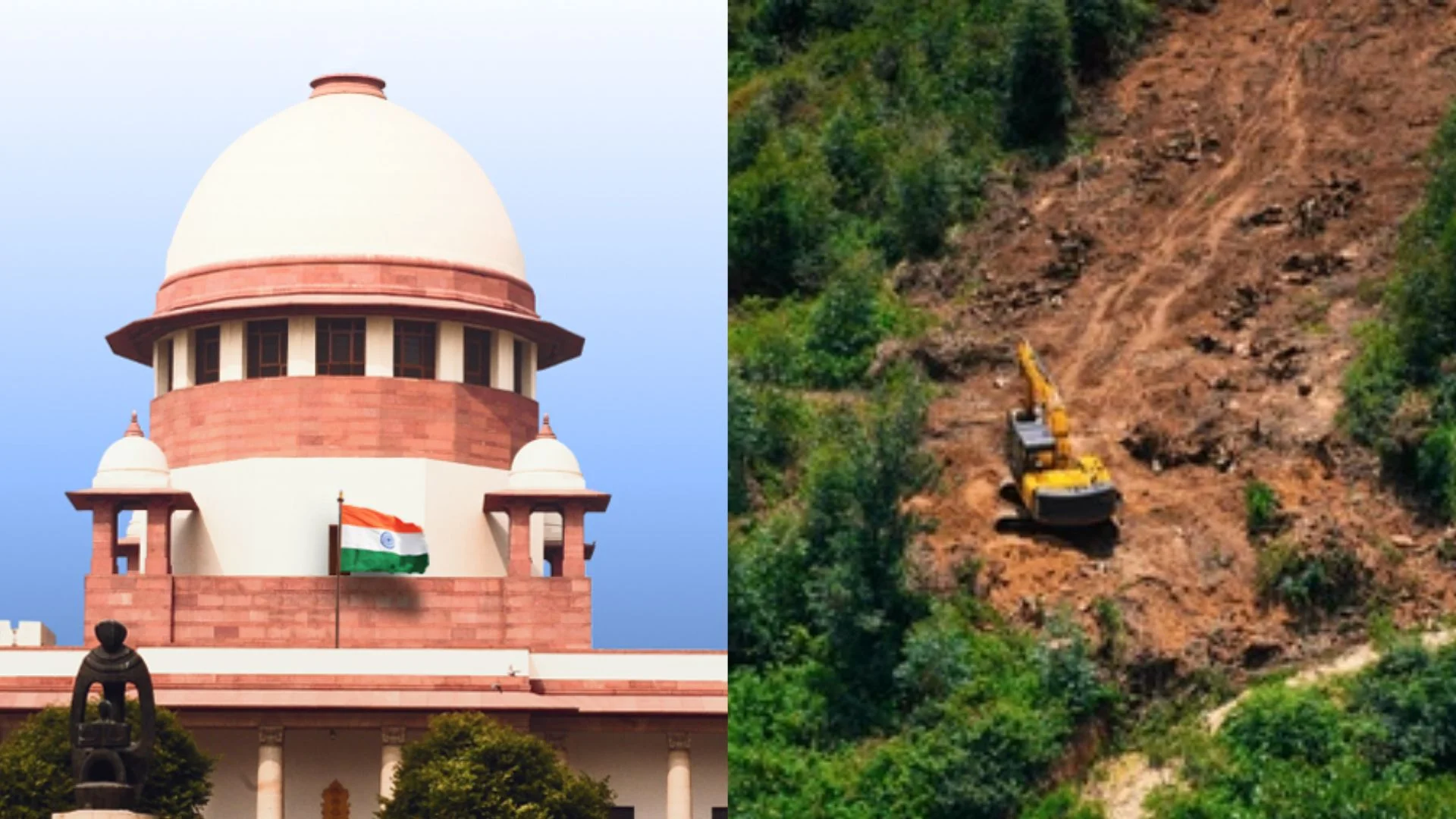
In May 2025, a division bench of the Supreme Court of India (SC) comprising Justice Ujjal Bhuyan and Justice Abhay Oka delivered a landmark judgement that significantly shaped the trajectory of environmental jurisprudence in India. The Vanashakti judgement rightly emphasised the significance of the core tenets of environmental law and rejected the provision of ex post facto environmental clearance as alien to the Indian environmental jurisprudence. However the Supreme Court’s decision to recall its judgement in Vanashakti v. Union of India marks a troubling moment in Indian constitutional and environmental jurisprudence, not just because it recalls an important environmental landmark judgement, but because it does so through a jurisdictionally and doctrinally unsound route. What was framed as a review has functioned, in substance, as a reconsideration of merits.
Regulatory Background: Environmental Clearance Framework
The Ministry of Environment, Forest and Climate Change (MoEFCC) issued a notification in 2006 which held that an ex-ante environmental clearance (EC) is a mandatory pre-requisite for the commencement of any large-scale project. This was done to ensure that a project begins only after it in complies with the necessary environmental safeguards.
The government issued two notifications in 2012 and 2013 which permitted the approval of ex post facto environmental clearances. Despite a complete strike-down of these notifications by the Jharkhand High Court and subsequently by the National Green Tribunal (NGT), the government went ahead and introduced the 2017 notification. The Madras High Court further clarified that the 2017 notification would be a mere “one-time measure.” However, this appeared to be more like a tactic.
Subsequently, the government issued the 2021 Office Memorandum which, under the guise of procedural guidance, effectively enabled the grant of ex post facto environmental clearances.
Vanashakti judgement- Reaffirming strict environmental safeguards
To begin with, the original Vanashakti judgement was doctrinally sound. It reaffirmed what the Supreme Court had already said, that environmental protection is an integral component of the right to life under Article 21 of the Constitution.
Against this constitutional backdrop, Vanashakti relied on more recent precedents such as Common Cause, Alembic Pharmaceuticals, and Electrosteel Steels, which had categorically held that retrospective environmental clearance is alien to Indian environmental jurisprudence.
The judgement reaffirmed that development and environmental protection are not mutually exclusive and can proceed side by side. Significantly, the Court refused to portray violators as victims of regulatory uncertainty. It recognised that those seeking ex post facto clearances were companies, PSUs, mining developers, and industrial actors; entities fully aware of the legal requirement of prior environmental clearance.
The Vanashakti judgement acted as a stoppage to this pattern of utter disregard for established legal norms and the normalisation of non-compliance.
Importantly, the judgement did not retrospectively invalidate environment clearances which were granted under the 2017 and 2021 Notification. Paragraph 35 of the Vanashakti judgement explicitly protected environmental clearances issued prior to 2025, preserving legal certainty, while taking a calculated approach. If the Vanashakti judgement was consistent with settled environmental jurisprudence and cautious in its consequences, the question that arises is on what legitimate grounds it could have been reviewed at all.
Review Petition- An action beyond jurisdiction?
Within six months of the passing of the Vanashakti judgement, a writ petition was filed by Confederation of Real Estate Developers’ Associations of India (CREDAI) before a two-judge bench of the SC to recall the Vanashakti order. Surprisingly, departing from the usual high threshold accorded to such review petition, the bench recalled the order. Since a review petition is an exception to the principle of stare decisis, which forms the bedrock of common law traditions, courts across jurisdictions are generally reluctant to accept a review petition until a compelling case can be clearly made out.
To prevent its misuse and to make sure that it is invoked only in the rarest of rare cases and strictly under exceptional circumstances, the Supreme Court Rules, 2013 (Order XLVII) set in place strict conditions for review petitions. An application for review in a civil matter will only be considered on three narrow grounds, namely:
1. ‘Discovery of new and important information’
2. ‘Error apparent on the face of the record’
3. ‘Any other sufficient reason’
One of the principal arguments advanced by the review petitioners in seeking recall of the Vanashakti judgement was that certain portions of the precedents relied upon, that is, Alembic, Common cause and Electrosteel, were omitted or insufficiently considered.
According to the review petitioners, a holistic reading of the judgement would have supported the proposition that ex post facto environmental clearance may be permitted in the rarest of cases where closing the industries, etc, would have caused more harm, pollution, and loss of livelihood. On these grounds, the review petitioners contended that the Vanashakti judgement, having misinterpreted the precedential ratio, ought to be treated as per incuriam and be made liable for a review. This argument however overlooks a fundamental limitation of review jurisdiction, as a review petition allows a court to reconsider its own judgement only under very limited circumstances.
Limits of Review Jurisdiction
In Bengal Immunity Co. Ltd vs State Of Bihar & Ors, the court cautioned that
“93….the power to reconsider should be exercised very sparingly and only in exceptional circumstances….The object of Article 141 is that the decisions of this Court on these questions should settle the controversy, and that they should be followed as law by all the Courts, and if they are allowed to be reopened because a different view appears to be the better one, then the very purpose with which Article 141 has been enacted will be defeated….”
This judgement effectively emphasises upon the high level of threshold accorded to Article 141 of the Constitution which upholds the finality of the judgements delivered by the SC. Following the same line of reasoning, the court in Parsion Devi v Sumitra Devi also observed that a review petition cannot challenge the correctness of a decision on merits unless there is an error apparent on the face of the record. A review petition, it must be remembered, has a limited purpose and cannot be allowed to be an appeal in disguise. Its purpose is to correct a patent error on the face of the record, not to rehear the case as if it were an appeal. In the absence of the discovery of new material facts or a self-evident error, a judgement cannot be recalled merely because an alternative interpretation of precedent is possible or might have yielded a different conclusion.
Even if the judgement was to be reviewed on the third ground, the court in Moran Mar v. Rev. Mar Poulose Athanasius, clarified that the third ground for review petition, that is “any other sufficient reason,” must be construed strictly and analogously to the first two grounds and must not be exploited to arbitrarily review any decision of the court.
A further contention advanced was that the Vanashakti Judgement was per incuriam for failing to follow earlier decisions. This argument is however, subject to further doctrinal scrutiny. A judgement is per incuriam only when it ignores a binding precedent or statutory provisions, which is determined by whether the ratio decidendi is followed.
The Review judgement contests that the order passed in Alembic, Common Cause and Electrosteel was to impose penalties on the industries instead of shutting them down and thus the ratio derived from these three judgements was to take a ‘balanced approach’, weighing the pervasive harm caused to the environment on one hand and industrial development on the other. However, the core message conveyed still remains intact: that ex post facto environmental clearance is legally impermissible and alien to the EIA framework. The imposition of a penalty was an exception, exercised by the Court under its extraordinary powers granted under Article 142, invoked to do complete justice in the peculiar facts of those cases. The exercise of article 142, thus, does not dilute the core legal principle applied in the judgement, which emphasises that even if the judgement refrained from ordering the closure of industry and imposed monetary penalties, the core legal principle applied or the ratio derived from the judgement would still be that ex post facto EC is antithetical to environmental laws
The same argument can be advanced to the other precedents relied on. Calling the judgement per incuriam therefore confuses exceptional relief with binding law, causing a misinterpretation of stare decisis.
Doctrinal Concern and Judicial Backtracking
The recall of Vanashakti raises a serious doctrinal concern, particularly when examined through the lens of the precautionary principle and the principle of environmental non-regression.
Indian environmental jurisprudence is centred around this foundational pillar, that focuses on preventive action rather than damage treatment. Ex ante environmental clearance flows directly from this approach, not merely a procedural requirement but rather as a substantive safeguard necessary to ensure that disasters like the Bhopal gas tragedy or the Vizag gas leak never take place. By recalling a judgement that rejected ex post facto clearance, the Court has diluted a settled baseline and a doctrinal commitment to precaution.
Alternate Path: What could have been done differently?
The review of the judgement, appears to be a failure as a whole, where the court could have adopted a more proportionate and restrained approach.
Firstly, for industries that had already applied for environmental clearance and were on the verge of approval, the Court should have carved out a narrow, one-time exception, subject to strict environmental audits and penalties; recalling the judgement as a whole would ‘open floodgates’ and act as a means for violators to escape regularisation.
Secondly, the judgement repeatedly points out the serious consequences of demolition/closure of industries, since they are made out of public exchequer funds. This argument could be resolved by conducting a cost-benefit analysis which would help in a more nuanced understanding of the proportional risk involved vis-a-vis the expected outcome of a complete closure of the industry. However, extending this rationale to private entities is flawed and reflects a pro-profit approach that effectively places a price on environmental harm. Even among industries granted exceptional treatment, equating private companies with public sector entities is unjustified; private enterprises primarily operate for commercial gain, unlike public undertakings where the argument of safeguarding public money may carry limited relevance.
Thirdly, and most importantly, the real issue lies in the delay in granting environmental clearances. Although the Environment Impact Assessment (EIA) Notification, 2006 prescribes a timeline of 105 days for the grant of an EC, this timeline is rarely followed in practice. Industries have repeatedly pointed out that approvals often take up to 390 days (as mentioned by Justice Gavai in the recall order), leading to prolonged uncertainty. Such administrative delays weaken the clearance regime and push project proponents to begin operations without prior approval. If environmental clearances were granted within the prescribed timeframe, the need for ex post facto clearances would largely disappear.
Conclusion
The major issue lies in the entire perspective with which the recall has been made. The violators are viewed as ‘innocent victims’ of regulatory compliance, while a complete ignorance has been made to the fact that most of these entities have knowingly committed such illegality.
Constitutional provision of review petition is often weaponized, where judges end up misusing their discretion based on their own whims and fancies, ultimately lowering the threshold needed for such recall orders.
What is even more appalling, is that the arbitrary misuse of such power ends up benefiting the rich, upper class industrialists, and those in power. Amidst this judicial chaos, the environment- a collective right of the masses- is what suffers.
At the end, the Vanashakti Judgement was a forward-looking judgement, well principled in the evolving environmental jurisprudence, and the decision to recall the judgement was a regressive step, which raises serious concerns and requires rigorous deliberations amongst legal scholars and academicians. This article serves as a stark reminder to the legal system of the serious repercussions of arbitrarily recalling a judgment.
Leave a Reply